Friday, September 5, 2014

BLOG 1


When we read Plato’s Republic we learned about Gyges and the ring he took. He killed the King, and he also took his wife and kingdom. Gyges would have never had the courage to do all of that in the first place if he didn't have the ring that made him invisible to protect him. This series of unjust actions leads us to a question that we were asked during class.  What would we do if we were to have a ring that made us invisible? Would we use it to do wrong, or continue to do the right thing even though there is no one there to judge us?  

For me, the first thing that came to mind when we were asked this was to prank my mom, but would we only do childish things or would we do things that we wouldn’t normally do if we were being watch by someone else. This is where defining justice comes to place.

From my point of view, I see justice as doing the correct thing to do without having the need of someone else's presence to do right. We must do what is right whether there is someone else there to judge or not because in the end we all have morals. Sometimes we might not put them into practice, but they are there. Having no one there to see the wrong or unjust things we do does not make those actions okay.

More than anything, when we are just with others we should not expect anything in return because in the end it is the right thing to do. When we commit injustice and aren’t caught, I don’t think that we would be at peace with ourselves because we aren’t doing what we are ought to do. We gain things without really earning them. In the end might not have to face the consequences right away, but eventually we will have to face them.

Republic Post

Through out the life of man we are taught to have certain morals and values to determine what is truly right or wrong, what is sacred and what is not, what is just and what is unjust. Man is a devious creature that we all have become, we lie, steal, cheat, and stab each other in the back, but only when we are not seen. Glaucon's story in the Plato's Republic is the perfect example of what I mean. Glaucon's story is a statement that man is only willing to commit a crime if he is under the shroud of the night. The fact is is that man is scared, terrified that justice will strike them down and that keeps things like this from happening. Everyone wants to do or know something wrong in this world no matter what that may be, from stealing money from a bank to listening to private conversations. Though, it is our established morals and our fear of the consequences that keeps man from doing these things. Our established morals help us instate and tell what we truly think is just and unjust some people may say that if you are doing the crime that is all that it is an unjust crime others have their own opinion of what is truly just or unjust. Some choose to live life never thinking that something is wrong unless someone tells them that it is wrong. It is similar to the old saying, it is only a crime if you get caught, and with that mind set people blur the lines of what is truly unjust. Is man truly doomed to go this path or are able to repent and save us from the way that we have become.

Though my writing went off on a slight tangent, what do you think is truly just/unjust and what is crossing the line of what is just/unjust?

Republic

First off, everyone is entitled to their own opinions and mine may differ from others and I accept that and would love to hear their feedback.

While reading I was presented with the question "Is it more profitable to be just or unjust?"pg.13 Guignon. Being a moral and just person is in their best interest, but we aren't perfect all the time. I looked over the two arguments presented by Glaucon and Socarates and pondered which side I most agreed with. I guess I can say that there are things that I agree and disagree with from both philosophers. Being a just person is seen as a good person who does the right thing most or all the time. Doing unjust things are seen as breaking the rules or going against the grain of society. Which is more profitable? I believe that the rewards one reaps from doing just things are what gives a person true happiness. We all commit injustices in our lives, but most of these create temporary happiness. We are all guilty of doing some unjust things in our lives, but in the end most of the time happiness is achieved through living a good life and committing good acts or deeds.

Republic Blog

I have a difficult time determining what I agree with more: people are just because they want to be morally correct; or people are just because they want the reward, and they fear the consequences they will face for being unjust.

I would love to believe that people want to be just because it's the right thing to do, but I don't fully agree with that. I think people can do things without the intention of getting a reward, but there is usually an unintentional reward that comes along with doing something that is "just".

If you see a homeless person and you give them money for no reason at all, you didn't do that to receive a reward. However, later on, you may feel good about yourself though for doing something good, that in and of itself is a reward. You didn't do it for fear of the consequences of not doing it, and you didn't do it to receive an award, but somehow you were still rewarded in the end.

So can anyone ever be "just" and not truly receive some sort of an award at the end, either intentionally or unintentionally? No good deed goes unpunished....or without reward.
"We are Our Own Obstacle"

     When first reading Kafka’s “Before the Law”, the story seems to convey that the “law” is something that cannot be accessible by insignificant people, or in this case a country man. The law is portrayed as this mystical figment that can only be grasped by going through three gates, guarded by powerful gate keepers. As I kept reading, the problem with grasping the law became less of the accessibility of the law, and more about conveying that we can be our own personal hindrance. The country man waited years, only to stay outside of the gates so that he did not reject or disobey “authority”. The irony of the situation is that no rules or regulations had been set in place for the country man to follow.  It was almost like an instinct he had just to take the gate keepers word at face value, versus questioning his authority and ability to let him through the gate. The law, in this case, is not set up by a governmental system or a higher power but through the country man’s willingness to obey the gate keeper. The contradiction in that is the fact that the country man did not question his authority. Most people do not question authority because they assume that the law is the structure of society, and it should be obeyed. However, there are many laws in place that people do not agree with such as the death penalty laws. Another example is the number of years a person can get from having illegal substances in their possession, versus the four years for manslaughter.  It is in the human nature to obey and follow the law, regardless if we believe if they are just or not. The country man had no prior knowledge to what power the law actually had. He simply acknowledged the gate keeper’s authority and respected it.  Is society just following the law because it believes in what the law stands for, or is it just afraid of the consequences of over stepping its boundaries?

Thursday, September 4, 2014

Republic Blog

I, like several others in class, found this reading very dense and hard to read. After several attempts to try and understand parts of it, I still have not not wrapped my head around all of it. However, in class our discussions briefly touched on a topic regarding an aspect that determines what is justice/injustice that I have pondered.

I believe it was mentioned in class at some point that who or what makes things just or unjust? I found this question very interesting. Say any given action in any given society is deemed just. However, one day that society is overthrown and new laws govern the land. What is just before is now unjust. Now, in my opinion, most of the people would probably go about doing primarily just deeds. But, I imagine that some would refuse to accept these new rules. Another thing that also comes to mind is the question, whose beliefs are the right ones? In a societal setting, the people in charge pretty much have dominion over that, but are they ultimately right? 

An obvious answer is that, everyone has an opinion what is just or unjust. As well as everyone having their own reasons and beliefs as to why. Looking back on my example, I notice that this is happening in the world today. Which side is correct on what they believe is just/unjust? Or is it their place to do so?

PS: never done a blog before and I am exhausted mentally as I write this late at night. Hope it makes sense and give your opinions. 

Wednesday, September 3, 2014

No Morals

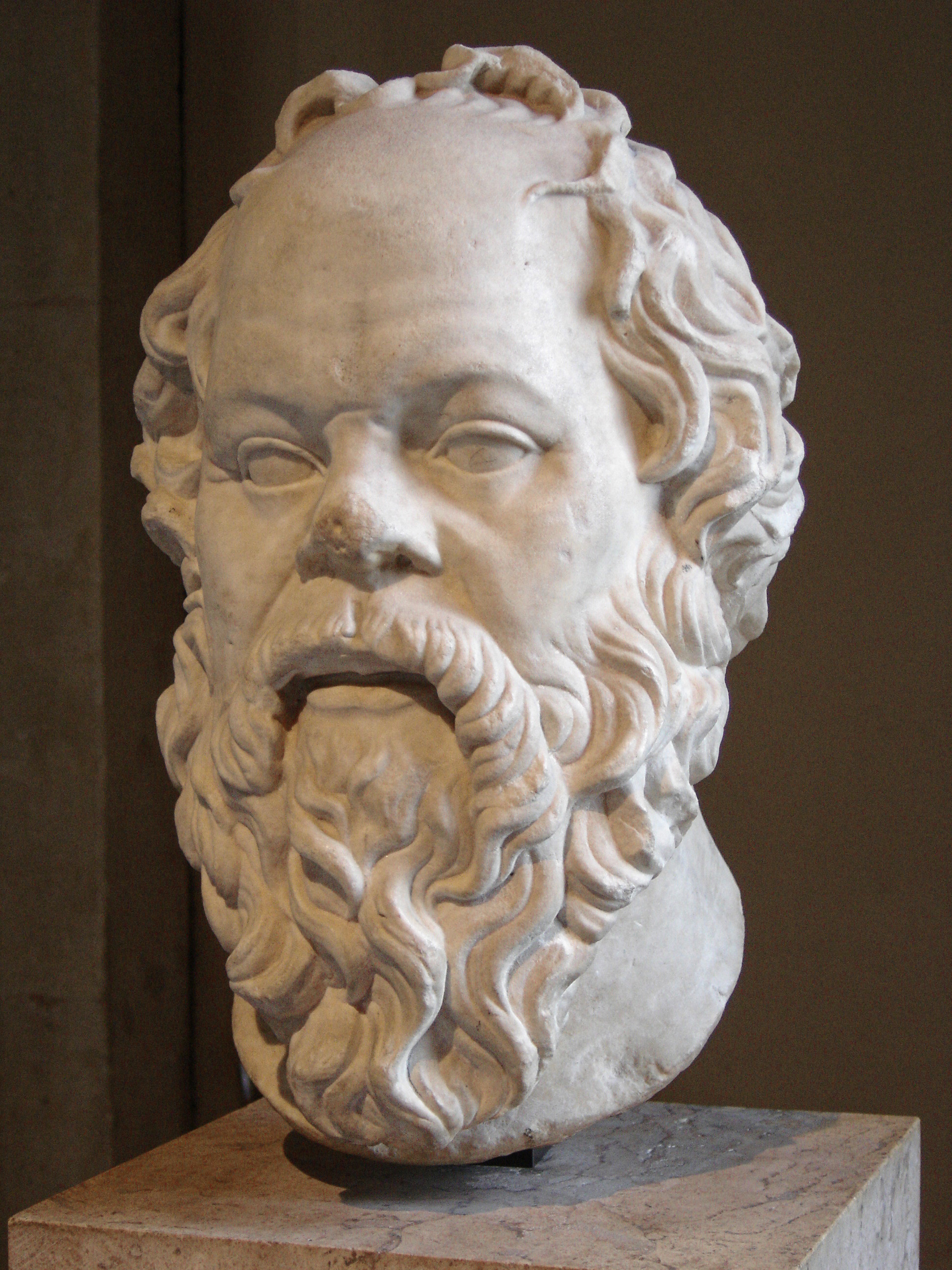
Socrates

In the section of Plato's Republic read and discussed in class we spent a lot of time dealing with the question of what we would do if any one of us were to acquire the Ring of Gyges. We should all know that the farmer in the myth who came into possession of the ring learned that it granted him invisibility. This knowledge of the ring's power lead to the farmer using it for his own personal gains by bedding the queen and conspiring with her to kill the king for the kingdom. The farmer did this because with the granted power of invisibility he knew he would not be judged for his actions. (http://sites.wofford.edu/kaycd/plato/)

No no not that ring, but similar.
 

So with this knowledge when asked about what we the students would do if granted this power many of us admitted to (or privately thought to ourselves) that we would indeed do the same or something similar within the realm of "unjust" actions. This got me thinking if it were simply because no one could see us performing the actions that, if we weren't invisible, we would never perform to begin with. That maybe because others were seemingly judging us constantly on our actions the mere absence said judgement would cause us to lose all morals and go on a tirade of unjust deeds. 

This made me think that perhaps there are no morals to begin with and the only morals we hold are there because someone else is looking on. Without the presence of another human being to be the judge we forgo all sense of morals and in place we only perform actions that would ultimately benefit us and nothing else. It's a disturbing idea since most of us would have trouble thinking of a world without some moral compass. To think that the world only has this moral compass because there are others to watch and judge. So there are no true morals and we only behave in the manner we do because the judgement of others and the consequences that would ensue keep us from performing acts many would consider unjust. 

(First stab in the dark with blogging, hope it's not terrible. Feel free to comment and ask about it before or after class.)